The useful starting point
Protection types address different hazards. Ask what the installation requires and how the owner follows the actual product instructions.
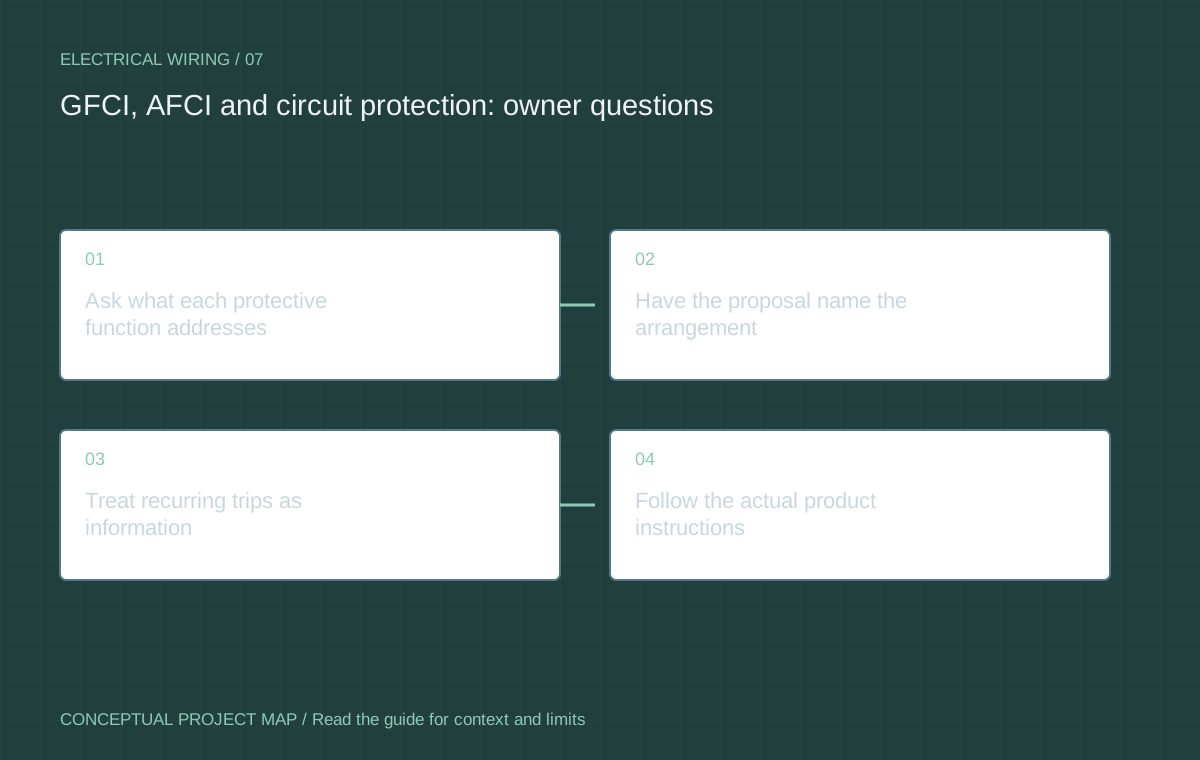
Ask what each protective function addresses
Ground-fault protection and arc-fault protection have different purposes. Overcurrent protection is another function in the arrangement. A device can combine functions, so a generic label does not fully describe what is installed.
CCOHS explains ground-fault protection in its safety guidance. The electrician must determine the required protective arrangement under the applicable code and equipment requirements. This guide does not publish room-by-room code thresholds or substitute for design.
Have the proposal name the arrangement
Ask what is proposed for each relevant circuit and which equipment it serves. Identify required changes to existing distribution equipment if compatible protection is not available. Do not assume every device that physically fits a panel is suitable.
Protection suitability and whole-property supply capacity are different checks. Adding a protective function does not establish capacity for a new appliance; increasing service capacity does not eliminate a circuit fault.
Treat recurring trips as information
Record what equipment was operating and which areas lost supply. Describe the device's visible indication if it is safe to do so. Ask the electrician how the actual product communicates the reason for an operation.
Do not bypass, remove or uprate protection to keep equipment operating. Avoid repeatedly resetting a device to reproduce a suspected fault. Have the installation and connected equipment assessed by a qualified person.
Follow the actual product instructions
Request the manufacturer information and an owner explanation of accessible controls, normal indications and any prescribed owner checks. Different products can have different procedures. A generic online test sequence should not replace the instructions for the equipment installed.
Discuss who to call when a check fails or a symptom returns. Keep the directory and manuals together so another occupant can identify the equipment without opening covers or guessing.
Keep protection in future changes
A changed appliance, circuit use or distribution arrangement needs assessment against the applicable requirements. Save the installed protection details with the project record. A future contractor should not have to infer the original design from a vague invoice.
Read the handover guide for the records and the assessment guide for existing circuits. No part of this page authorises owner wiring or energized investigation.
Questions / Direct answers
Common questions
Are GFCI and AFCI the same thing?
They address different functions. Ask the electrician what the actual circuit and equipment require.
Can I remove protection if an appliance trips it?
Do not bypass protective functions. The circuit and equipment need qualified assessment.
Does protective equipment make an extension-cord installation permanent?
No. Protective functions do not replace suitable wiring design and installation.
References / Jurisdiction matters
Sources & further reading
Confirm the actual location, permit authority and equipment instructions before relying on a requirement. A source from another jurisdiction is identified for context.
- Electrical safety — basic informationCanadian Centre for Occupational Health and Safety · 2026-10-07
- Electrical codes and standardsGovernment of Alberta · 2026-10-07
Do not open equipment, handle refrigerants or work on energized systems. Permits, qualified trades and inspection requirements vary by location. This guide does not design an installation or certify existing equipment.