The useful starting point
A house may contain original circuits, partial rewiring and later changes. Build an evidence map before deciding what to replace.
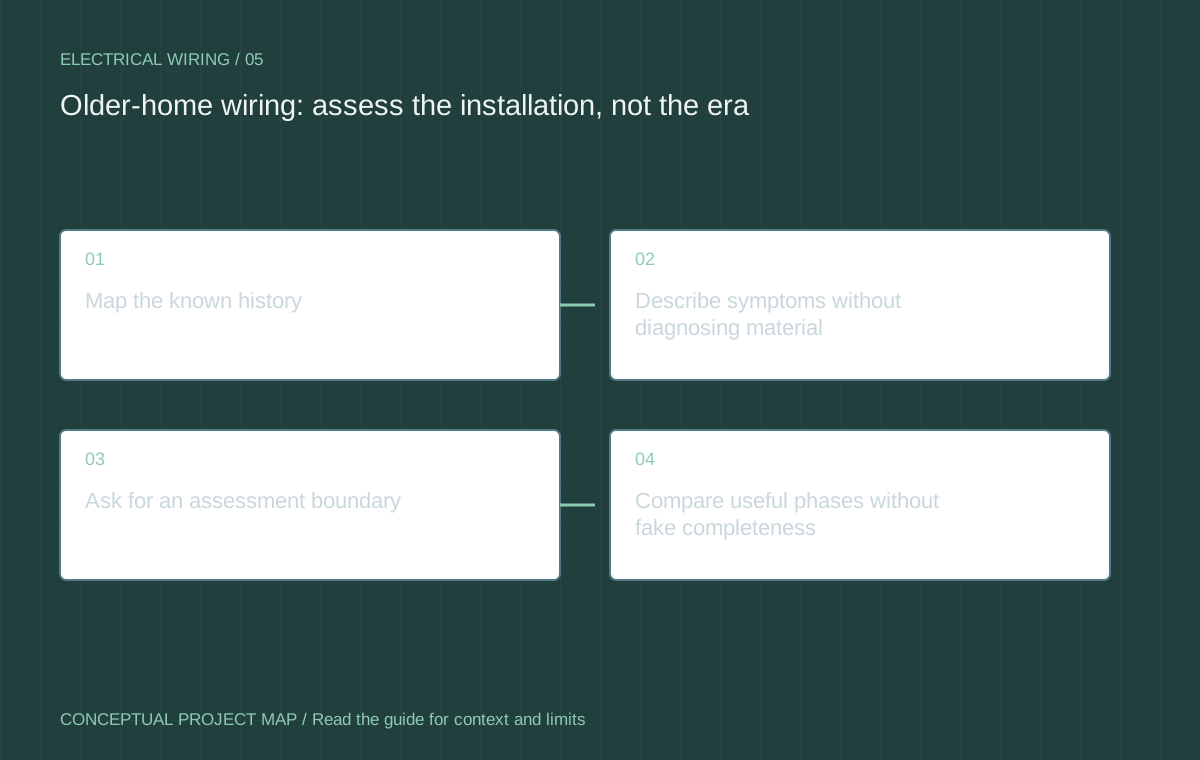
Map the known history
Collect available renovation invoices, permits, reports and safe photographs from previous work. Place them on a timeline by area and scope. One documented kitchen circuit replacement does not mean the whole house was rewired; an old enclosure does not prove every circuit is original.
Use three labels: documented, observed and unknown. This keeps the contractor's investigation focused without turning uncertainty into an accusation. Different rooms can have different work histories even in a small home.
Describe symptoms without diagnosing material
Tell the electrician about recurring trips, affected equipment, water events and past repairs. Record what happened and when, rather than conclude the cause from building age. A symptom might concern equipment, a circuit or a connection; it needs investigation.
Smoke, fire, shock or immediate danger requires moving away and using emergency services. Do not open suspect equipment to identify wire material or repeatedly reset protection. Safe observations and existing records are the owner's preparation.
Ask for an assessment boundary
Request a written description of what the assessment covers and its access limitations. A visible-only review is different from targeted investigation or a design for a renovation. Ask which concealed items remain unverified and what would be needed to establish them.
Have findings distinguish condition, unsuitable alterations, future-load suitability and documentation gaps. A single recommendation to rewire can hide different reasons; ask what each proposed work area addresses.
Compare useful phases without fake completeness
Some projects are planned in phases around access, occupancy and renovation scope. Ask the electrician what can appropriately be phased, what cannot wait and how interim arrangements are documented. Cost staging must not become a reason to retain an identified unsafe condition.
Record exactly what each phase renews. A partial project should leave a map of retained work and remaining assessment needs. Do not describe phase one as a whole-home electrical renewal in resale or contractor communications.
Leave a clearer evidence map
Keep findings, approved scope, variations, relevant inspection outcomes and final circuit identification together. Safe contractor photographs before surfaces close can help a later project. Save limitations as well as completed items.
Read the concealed-work guide and handover guide. The website provides an owner framework; a qualified professional assesses the actual installation under the applicable requirements.
Questions / Direct answers
Common questions
Does the age of the house tell me the wiring material?
No. Original work, repairs and partial renovations can coexist. Have the actual installation identified appropriately.
Does a new panel mean an older home has been rewired?
No. Distribution equipment and branch circuits are separate scope items.
Can rewiring be phased?
Ask the electrician which phases are suitable and how retained work and urgent findings are handled.
References / Jurisdiction matters
Sources & further reading
Confirm the actual location, permit authority and equipment instructions before relying on a requirement. A source from another jurisdiction is identified for context.
- Electrical codes and standardsGovernment of Alberta · 2026-10-07
- Electrical safety — basic informationCanadian Centre for Occupational Health and Safety · 2026-10-07
Do not open equipment, handle refrigerants or work on energized systems. Permits, qualified trades and inspection requirements vary by location. This guide does not design an installation or certify existing equipment.