The useful starting point
A whole-home concern deserves a room-by-room scope that states what was assessed and what remains concealed.
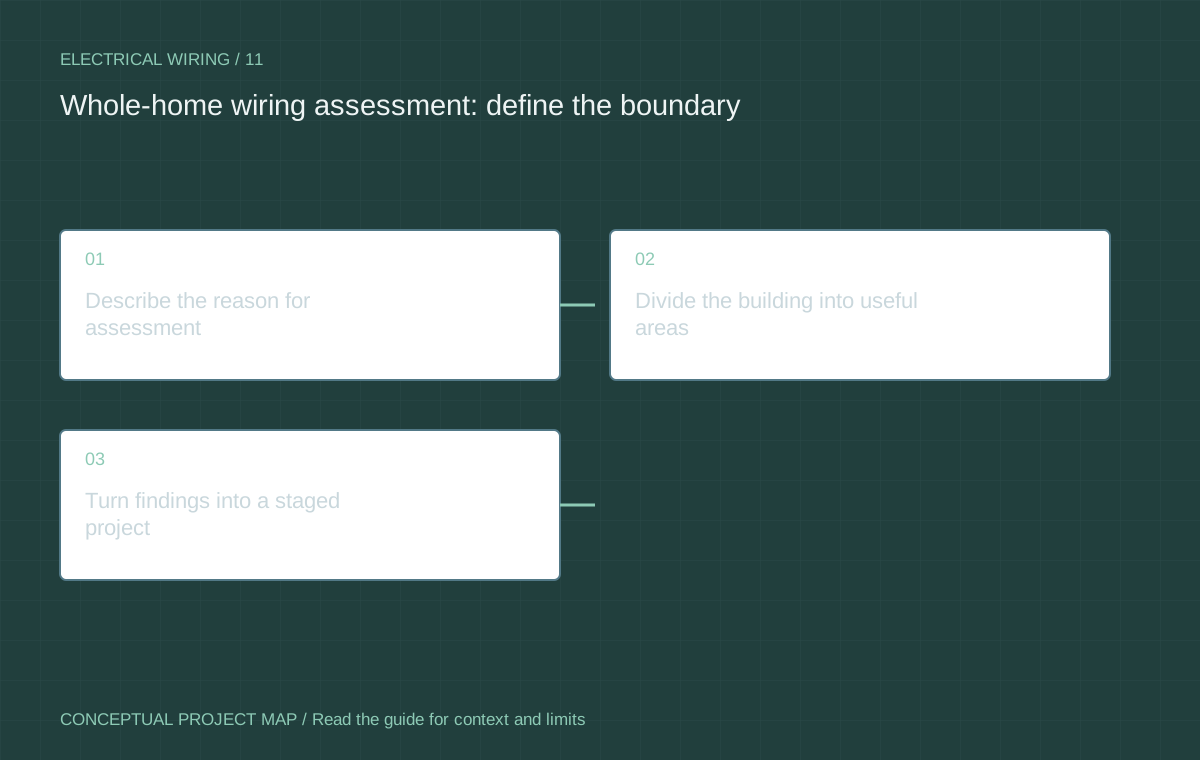
Describe the reason for assessment
Bring observations, insurer or inspection reports, prior renovations and any known permit records. Distinguish recurring symptoms from a general wish to modernise. If there is an immediate hazard, use the appropriate urgent professional or emergency channel.
Do not label the entire house from one visible outlet or a remembered renovation date. Ask the assessor to state which areas and equipment were accessible and which could not be examined.
Divide the building into useful areas
List main rooms, additions, garage, basement and major equipment. Identify known changes by date and contractor where records exist. Record vacant, occupied and hard-to-access areas as separate planning constraints.
Ask how the assessor will report findings, uncertainties and recommended next steps. An assessment should support a scope decision; it does not automatically mean every concealed cable needs replacement.
Turn findings into a staged project
Ask which work addresses a condition issue, which supports a renovation and which is a future option. Define permit and inspection responsibility and how finishing work is coordinated.
Keep the original findings with the completed scope. If only some circuits are replaced, the handover should say so plainly. A future buyer should not have to infer a whole-home upgrade from a partial invoice.
References / Jurisdiction matters
Sources & further reading
Confirm the actual location, permit authority and equipment instructions before relying on a requirement. A source from another jurisdiction is identified for context.
- Electrical codes and standardsGovernment of Alberta · 2026-10-07
- Homeowner electrical and plumbing permitsCity of Calgary · 2026-10-07
- Electrical permits — residentialCity of Edmonton · 2026-10-07
- Electrical safety — basic informationCanadian Centre for Occupational Health and Safety · 2026-10-07
Do not open equipment, handle refrigerants or work on energized systems. Permits, qualified trades and inspection requirements vary by location. This guide does not design an installation or certify existing equipment.