The useful starting point
Documentation gaps and concealed conditions need a defined investigation. Do not treat either as a complete safety verdict.
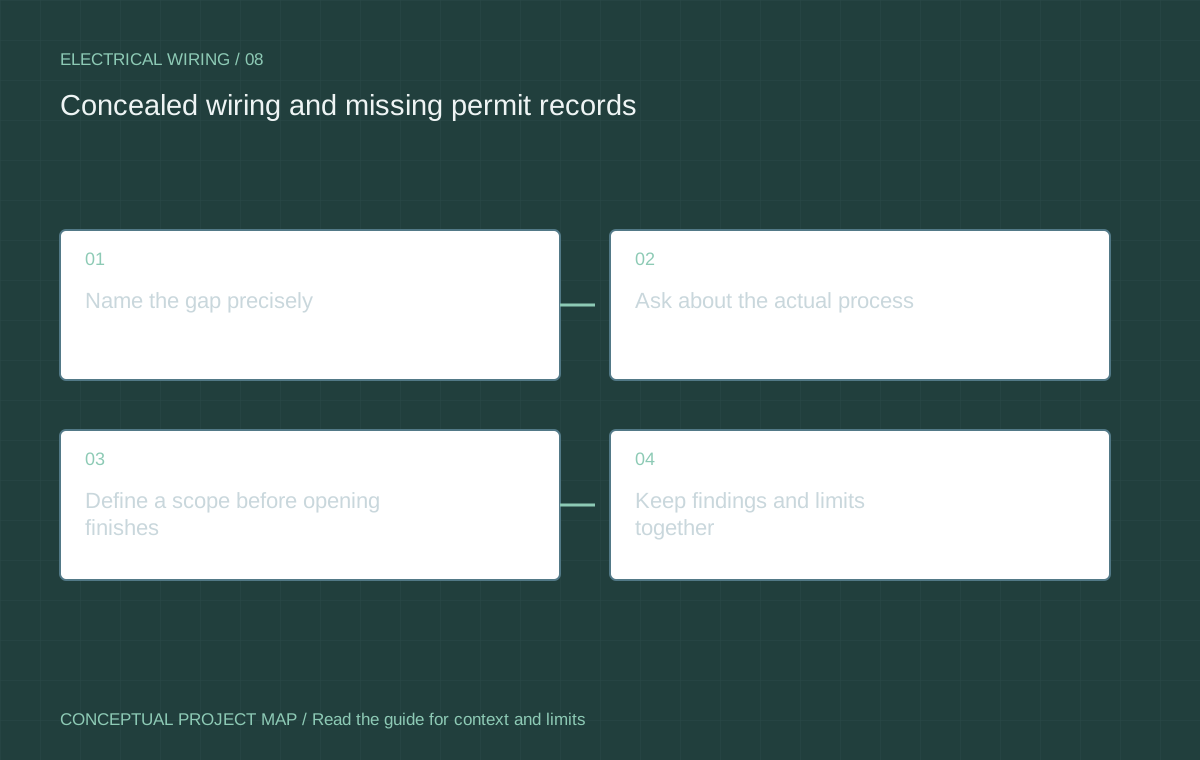
Name the gap precisely
A missing document, an incomplete search and work that was concealed without the required inspection are different situations. Record what was searched, what was found and what remains unknown. Ask the authority about property-specific records rather than assuming an old invoice is a permit.
Collect the work dates, contractor information and scope where available. If an owner cannot establish the history, say so. This supports a targeted next step without inventing a story about how the work was done.
Define a scope before opening finishes
Ask the electrician what investigation is proposed, what it can establish and what access may be needed. Agree the affected areas, restoration responsibility and variation process. A staged investigation can identify further questions; it should not be described as a complete certification before its scope is known.
Opening surfaces has building and restoration implications. Coordinate with the relevant professionals, especially where hazardous materials or sensitive assemblies may be present. Do not start owner demolition merely to make an electrical quote easier.
Keep findings and limits together
Request a record of assessed areas, corrective work, retained circuits and remaining limitations. An inspection outcome belongs to the permitted project; it should not be represented as a blanket assurance about every concealed part of the property.
Where records remain unavailable, keep that status visible. If additional work becomes necessary, record the finding and authorisation rather than allowing it to disappear into a general repair invoice.
Make the next renovation easier
Save the current permit and inspection outcome, contractor report, approved scope, photographs provided safely by the contractor and final identification. A labelled map of investigated and uninvestigated areas is useful to the next owner or trade.
Use the quote guide to allocate investigation and restoration. Technical assessment and energized work require qualified people; an online reference cannot approve concealed work.
Questions / Direct answers
Common questions
Do missing records prove wiring is unsafe?
No. They establish a documentation gap. Appropriate investigation may still be necessary.
Can I get a homeowner permit after someone else concealed the work?
The applicable authority determines the process. Do not assume homeowner permitting resolves completed contracted work.
Will every wall need to be opened?
The site facts, investigation and authority requirements determine access. Obtain a defined scope rather than a universal promise.
References / Jurisdiction matters
Sources & further reading
Confirm the actual location, permit authority and equipment instructions before relying on a requirement. A source from another jurisdiction is identified for context.
- Homeowner electrical and plumbing permitsCity of Calgary · 2026-10-07
- Electrical permits — residentialCity of Edmonton · 2026-10-07
Do not open equipment, handle refrigerants or work on energized systems. Permits, qualified trades and inspection requirements vary by location. This guide does not design an installation or certify existing equipment.